This week in class we discussed the theories of Marshall McLuhan. He was particularly interested in the way media impacts our society and culture. During the class we discussed one of his most famous quotes “the medium is the message”. McLuhan argues that the medium used is more impactful on society than the actual content of a message. To further understand this statement we looked at the way media has evolved over the decades, and how differently society has been effected by it. Television was one of the most significant media at the time of McLuhan. Before television people spent there evenings listening to the radio, reading, writing and talking to one another. This all changed once televisions became available. Unlike reading which was an individual activity, television was a communal experience. People gathered around the TV as if it were a fire. It brought people together. It changed the dynamic of families, people were now spending more time together yet were not speaking to each other as much. The television had a much stronger impact on our society than the radio because of the attention it demands. TV’s are captivating, and unlike the radio which you can listen to in the background while doing other tasks, they require your full attention. By looking into this it is clear that it doesn’t actually matter what is on TV, it’s the TV itself that has had such a notable impact on society.

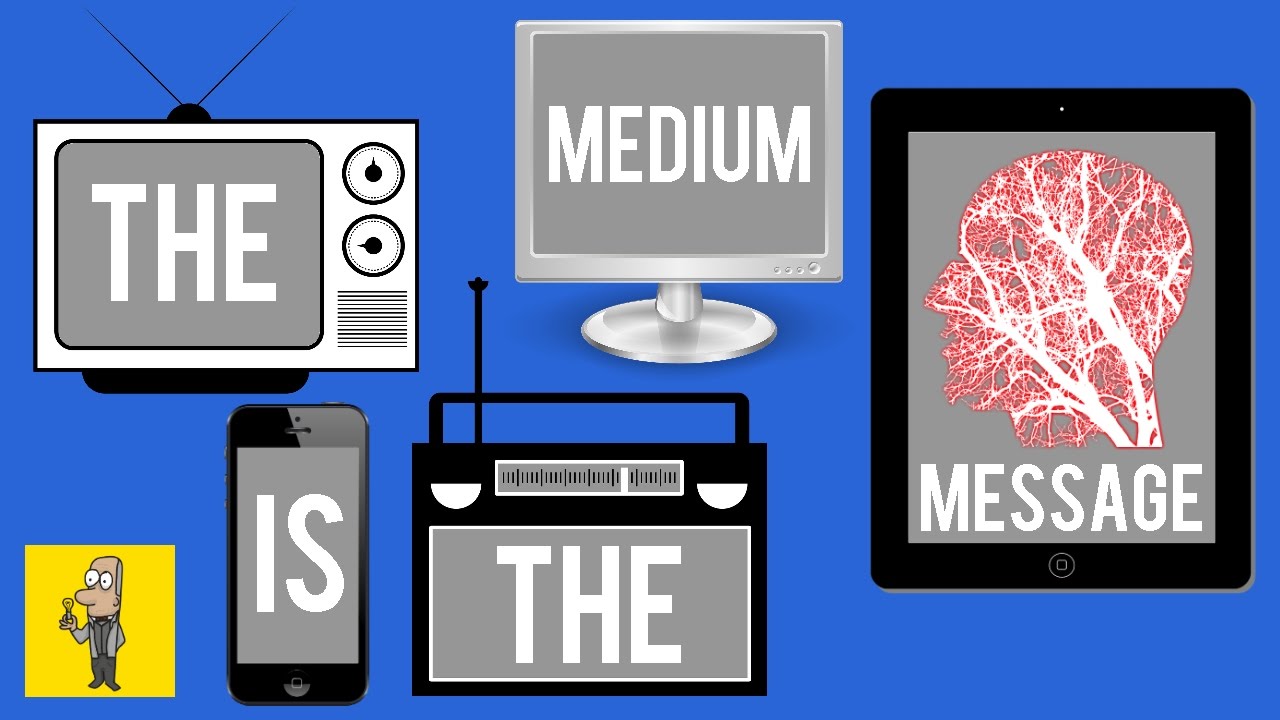
McLuhan’s philosophy can be referenced in today’s world also, with the new technological advancements such as the internet. McLuhan makes me reflect on the impact that the internet and social media is having on our society. Since it’s still all so new, we don’t yet know of the possible consequences this new medium will have on our society. However the changes happening are already starting to emerge, particularly in younger generations. People have become much more isolated within there own homes. Social media, similar to reading, is a much more individual activity than watching television. However, unlike any other medium before, the internet allows us to connect with people in a virtual space. It offers an “escape from the given reality and, as a consequence, the abandonment of the body” (Miroshnichenko 2016). People might be spending less time physically together, but they are still connecting through social media. Using McLuhan’s ideas, it’s interesting to think about how this new from of interaction will impact our society, and how it will change the way we live for better or for worse.
McLuhan had the idea that tools were extensions of ourselves, there is no such thing as “just a tool”. Gardner Campbell states that “tools are not inert things to be used by human beings, but extensions of human capabilities that redefine both the tool and the user.” (Campbell, 2013). An analogy he used was that if you pick up a hammer the tool becomes an extension of your being so that it is no longer a hammer and a hand, but a “Hammer Hand”. I find this analogy quite interesting. It makes me think of all the other “tools” that have become a part of me. My voice is a tool I use to communicate, in the same way that a pen is, or a keyboard on a laptop. In a similar way I think our online presences have become extensions of our physical lives. They are tools we use to communicate to others but have become a central part of everyday life. Because this “tool” has become an extension of who we are, we behave accordingly. We check on our social media accounts as part of our daily routines, and treat our interactions on them the same way we would an in real life interaction. They have become so integrated into our daily lives that they feel like just that- an extension of our being.
Well, that’s all for now. See you next week.
Monald
References:
Miroshnichenko, A., 2016. Extrapolating on McLuhan: How Media Environments of the Given, the Represented, and the Induced Shape and Reshape Our Sensorium. Philosophies, 1(3), pp.170-189. DOI:10.3390/philosophies1030170
Campbell, G., 2013. Doug Engelbart, transcontextualist. [online] Gardner Writes. Available at: <http://www.gardnercampbell.net/blog1/?p=2170> [Accessed 5 March 2021].
McLuhan, M. (1977, June 27). Marshall McLuhan Full Lecture: The Medium is the Message. ABC Radio National Australia. [Video file]. Retrieved from https://www.youtube.com/watch?v=ImaH51F4HBw opens in new window
Image References:
“The Medium Is The Message”. 2021. Image. Accessed April 15. https://sparkarchitects.com/wp-content/uploads/2020/05/Luflan_mediumisthemessage.jpg.
Who’S There, Behind The Mask?. 2010. Image. https://unmaskd.files.wordpress.com/2010/12/anonymous2.jpg.
 Monald's Adventures
